Walk into most South African offices and you will see the same thing near reception: a smart poster listing five or six values. Integrity. Excellence. Teamwork. Innovation. It looks good. It photographs well for the annual report. It has almost nothing to do with what actually happens once people are past reception and at their desks.
Culture does not live on that wall. It lives in the tea room, on the group chat, in how someone responds when a junior colleague makes a mistake, and in whether people feel safe enough to say "I don't understand this, can you explain it again" without being made to feel small. Those small, repeated moments are culture. Everything else is marketing.
For hiring leaders, this matters more than it might seem. If culture is built in the small daily interactions between peers, then every single hire is a culture hire, not just the ones going into management. Get that wrong at scale and no values poster will save you.
Why culture initiatives stall
Most culture programmes are designed and driven by HR or by a small leadership working group. They run a survey, hold a workshop, agree on values, print them nicely, and communicate them at an all-hands meeting. Then everyone goes back to their desks and behaves exactly as they did before.
This is not because people are cynical or the values are wrong. It is because culture was treated as a project with a start and end date, owned by one department, rather than a daily practice owned by everyone. A project can be finished. A practice has to be lived, every day, by every person, particularly the people without a title.
The manager who champions the values in the boardroom has limited reach. The team member who sits next to five colleagues, eight hours a day, five days a week, has far more influence over whether those colleagues feel respected, included and safe to do their best work. Peer behaviour is the delivery mechanism for culture. Policy is just the intention.
What actually shapes belonging
Belonging is rarely built through grand gestures. It is built through ordinary, repeated behaviour that either includes people or quietly excludes them. Some examples that matter more than most leaders realise:
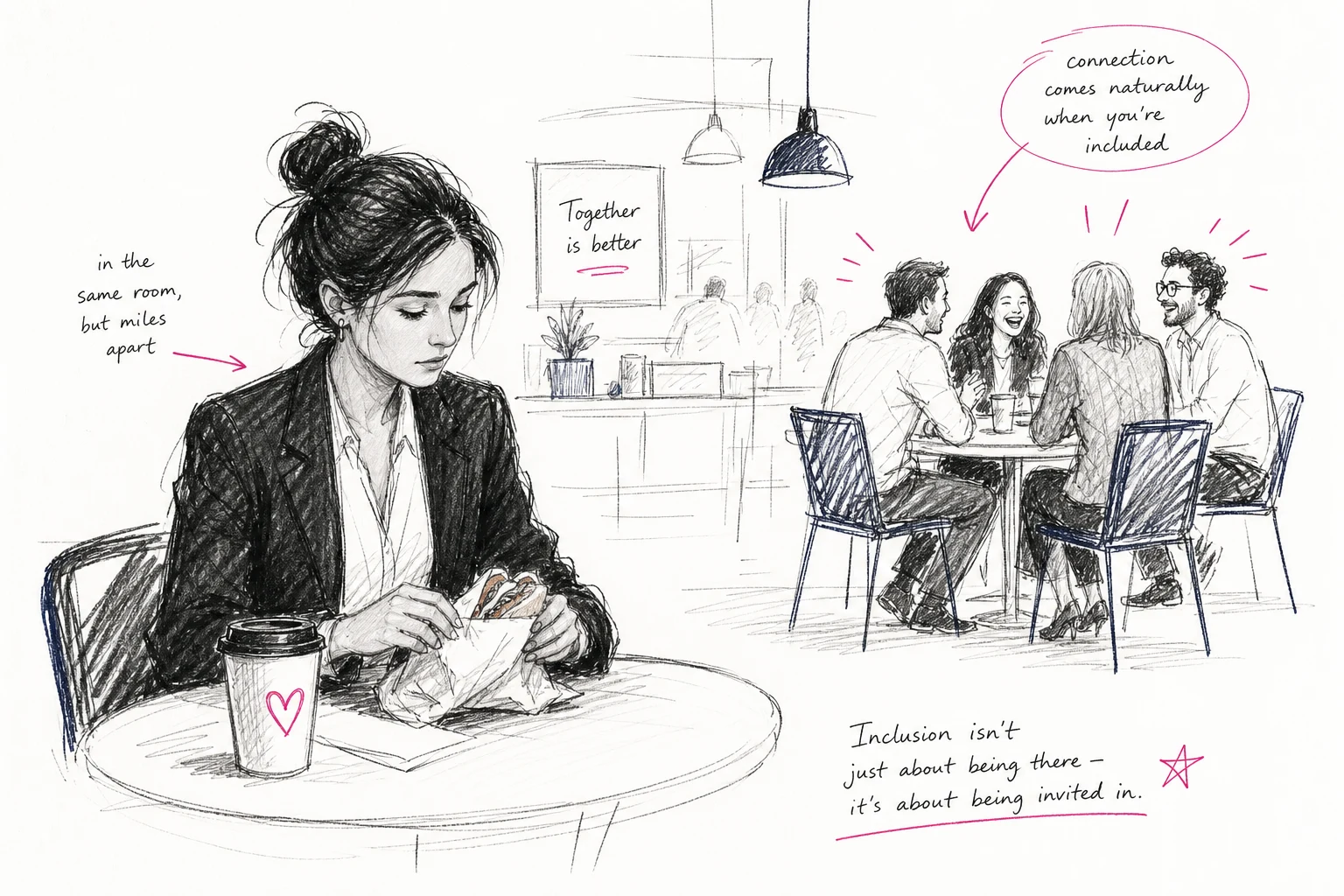
- Whether new starters are invited to lunch in their first week, or left to eat alone at their desk
- Whether questions are met with patience or with a sigh and an eye roll
- Whether credit for good work is shared, or quietly absorbed by whoever speaks first in the meeting
- Whether someone who disagrees with the group is heard out, or subtly frozen out
- Whether people feel comfortable admitting they are struggling before it becomes a crisis
None of this shows up in a values statement. All of it shows up in exit interviews, engagement scores and, eventually, in the quality of work a team can produce. A brilliant strategist who is cold or dismissive to junior colleagues does more damage to culture than a mediocre performer who is warm, fair and generous with their time. Most organisations still reward the former and quietly tolerate the latter.
Hiring for culture at every level, not just leadership
South African employers have generally understood, for some time now, that leadership hires need to be assessed for cultural fit as well as competence. Fewer have applied the same rigour to hires further down the org chart. That is a mistake.
A receptionist, a junior bookkeeper, a warehouse supervisor or a call centre agent has daily, sustained contact with far more people than most executives do. Their attitude, their patience, their willingness to help without resentment, shapes the daily experience of everyone around them. Hire well here and you strengthen the culture from the inside out. Hire poorly and you create small pockets of friction that spread quietly through a team long before anyone escalates it formally.
This is where interview processes often let organisations down. Technical competence is tested thoroughly. Cultural traits get a token question near the end: "tell me about a time you worked in a team," answered with a rehearsed story that reveals very little.
What we look for instead, across every level of a search, is more specific:
- How a candidate speaks about previous colleagues, not just previous managers
- Whether they take any ownership when describing a conflict, or place all the blame elsewhere
- How they respond to a direct, slightly uncomfortable question in the interview itself
- Whether their energy and tone shift when talking about people more junior than them
- Consistency between how they present themselves and how references describe them
None of this requires a psychometric test or a lengthy assessment centre. It requires a proper conversation, done in person, and a willingness to ask a second and third question rather than accepting the polished first answer.
The cost of getting it wrong
Every hiring leader has a story about a technically strong hire who quietly poisoned a team's morale. It rarely shows up on a scorecard immediately. It shows up months later, in unexplained resignations, in a team that has gone quiet in meetings, or in a good performer suddenly asking for a transfer with no clear reason given.
Replacing that hire is costly, but the bigger cost is usually invisible: the colleagues who decided the workplace was not worth the discomfort and left first, often the ones you least wanted to lose. We would rather help a client avoid that outcome than help them recover from it.
How The Appointment Firm approaches this
We are a partner-led agency, which means the person running your search is the same person sitting across the table from candidates, not a junior consultant working from a brief. That matters here because cultural fit is judged in the room, in tone of voice, in body language, in how someone answers the question they were not expecting. It is difficult to assess that properly over a video call summary or a CV.
We interview every shortlisted candidate in person before they reach you. We are not just checking whether someone can do the job. We are paying attention to how they talk about the people they have worked alongside, not just the results they achieved. We ask direct questions about how they handle disagreement, pressure and mistakes, because those moments reveal more about culture fit than any polished achievement story.
We also encourage clients to think about this at every level of hiring, not only for senior or leadership roles. A junior appointment made carelessly can undo months of careful culture work higher up the organisation. A junior appointment made thoughtfully can quietly strengthen it.
South African workplaces are diverse in language, background and lived experience in ways that make this even more important. Belonging cannot be assumed. It has to be built deliberately, through people who are genuinely good at including others, at every level of the business.
Culture is a daily practice, not a poster
If you want a healthier culture, the poster is not where to start. The tea room is. The group chat is. The way a new starter is welcomed in their first week is. And the hiring decisions that put the right people into those daily interactions, at every level, are what protect it.
If you are making a key appointment and want a partner who takes this seriously, not just for leadership roles but throughout your team, we would welcome a conversation. Get in touch with The Appointment Firm and let's talk about the people, not just the positions, you are trying to fill.